
Queensland’s January 2027 Smoke Alarm Laws: Is Your Home Compliant?
The Clock is Ticking for FNQ Homeowners
Following a series of house fires, Queensland introduced some of the strictest residential smoke alarm legislation in the world. The legislation was rolled out in phased stages starting in 2017 for new builds, followed by rental properties and property sales in 2022.
The final and most critical deadline is approaching fast: By 1 January 2027, EVERY owner-occupied home in Queensland must fully comply with the updated smoke alarm mandate.
If you own and live in your home, you must upgrade your smoke alarms before this deadline.
C & D Electrical and Instrumentation is helping homeowners across Atherton and surrounding regions transition early to avoid last-minute installer shortages and supply chain delays.
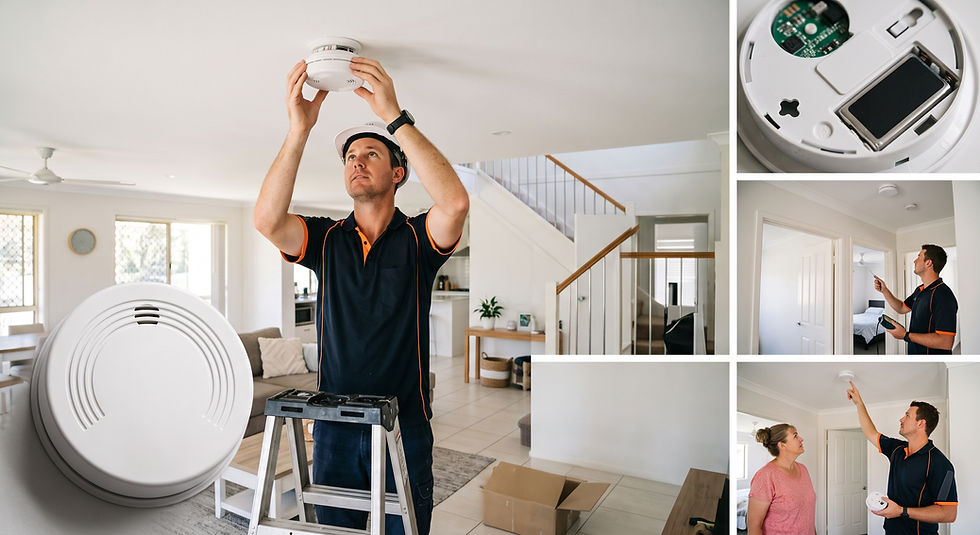
What Does the Law Require by 1 January 2027?
To comply with Queensland Fire and Emergency Services (QFES) standards, all residential properties must have smoke alarms that meet the following criteria:
Photoelectric Technology: All installed alarms must be photoelectric type complying with AS 3786-2014. Older ionisation alarms—which are slow to detect smouldering fires—are strictly non-compliant.
Interconnected Functionality: Alarms must be interconnected with every other smoke alarm in the dwelling. This means if a fire starts in a rear garage or laundry, every alarm in the house sounds simultaneously, granting occupants maximum evacuation time.
Power Source Requirements: Alarms must be either hardwired to the home's 240V mains power (with a battery backup) OR powered by a sealed, 10-year non-removable lithium battery.
Mandatory Installation Locations: Alarms must be installed:
In every bedroom.
In hallways connecting bedrooms to the rest of the house.
On every story of a multi-level home (even if there are no bedrooms on that level).
Along exit paths if there are no hallways.
Hardwired vs. Wireless Interconnected Alarms
When upgrading your home, you generally have two installation pathways:
Hardwired 240V Systems: Ideal for new builds, major renovations, or replacing existing 240V alarms. These units draw power directly from your home's electrical grid and use a backup battery during power outages.
RF Wireless 10-Year Lithium Battery Systems: Perfect for existing homes where running new electrical cabling through ceiling cavities is difficult or cost-prohibitive. These alarms communicate via secure radio frequency (RF) to trigger simultaneously while operating off an internal 10-year lithium battery.
Our licensed electricians evaluate your home’s layout and ceiling access to recommend the most reliable, cost-effective configuration.
The Risks of Non-Compliance

Failing to upgrade your smoke alarms before 1 January 2027 carries serious risks beyond state fines:
Life Safety: Photoelectric interconnected alarms save lives by providing early warning, particularly during night-time fires when occupants are asleep.
Insurance Implications: Insurance providers may reject or reduce claims for fire damage if the property is proven to be non-compliant with state fire safety laws.
Book Your Smoke Alarm Compliance Audit
Don't wait until late 2026 when demand spikes. C & D Electrical and Instrumentation provides comprehensive smoke alarm audits, system designs, and certified installations across the Atherton Tablelands.
Ensure your family and property are protected. Contact C & D Electrical and Instrumentation on 0419 027 317 to schedule your compliance upgrade.
Comments