
Is a Home Battery Storage System Worth It in Far North Queensland?
The Shift Toward Energy Independence
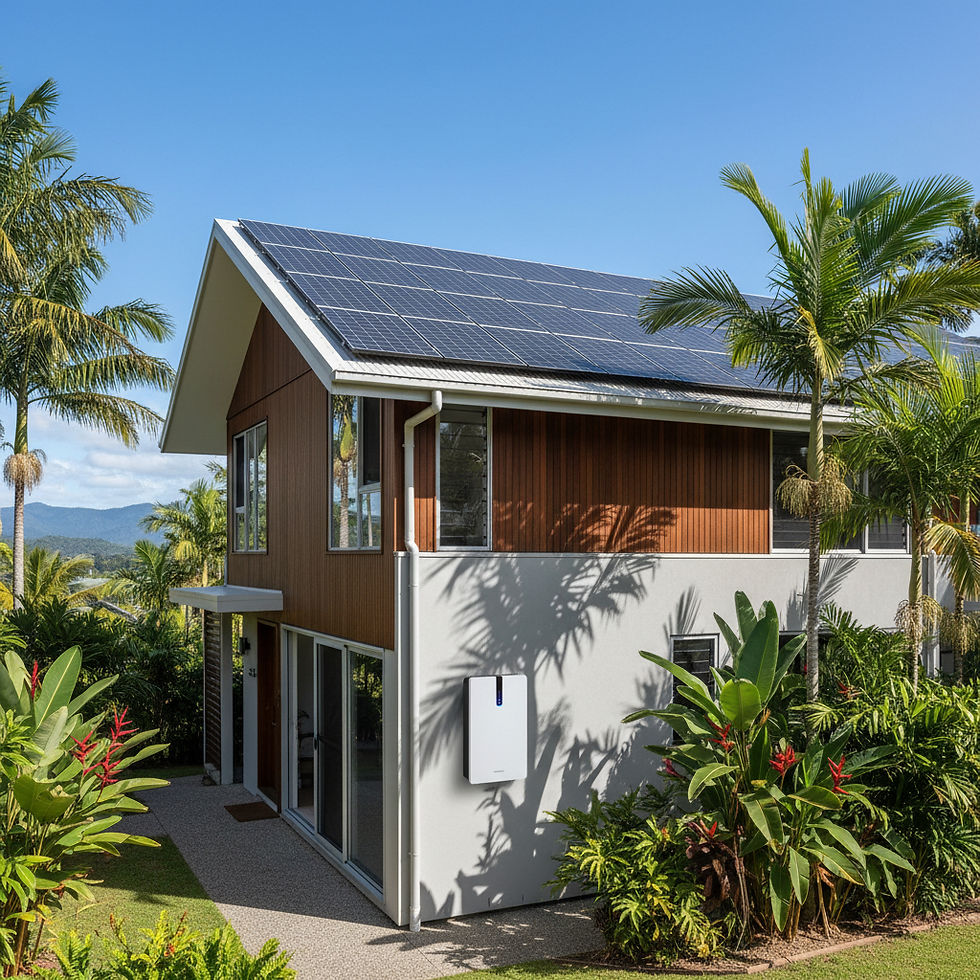
Solar panels are fantastic at generating power during the day, but peak household electricity usage typically occurs in the evening when air conditioners, cooking appliances, and hot water systems are running. For households across Atherton and Far North Queensland, this daily mismatch means sending valuable solar energy back to the grid for low feed-in tariffs, only to buy it back later at full price.
Adding a battery storage system bridges this gap, allowing you to capture every excess kilowatt-hour your roof produces and use it when you actually need it.
Key Benefits of Home Battery Systems in FNQ
1. Maximising Self-Consumption & Slashes Power Bills
Without energy storage, a typical residential solar array exports a large portion of its daytime generation back to the grid. A home battery stores that solar energy locally. When the sun sets, your house automatically switches over to battery power, reducing your reliance on expensive peak-rate electricity from Ergon Energy.
2. Blackout Protection & Severe Weather Resilience
Far North Queensland's wet season brings severe thunder, localised flooding, and tropical cyclones that frequently cause power outages across rural properties and townships.
Standard grid-connect solar systems automatically shut down during a blackout for grid safety. However, a battery system configured with Emergency Power Supply (EPS) or full backup capabilities can isolate your home from the grid and keep essential circuits running. This means your refrigeration, lights, water pumps, and essential medical devices stay powered through extended grid disruptions.
3. Navigating Export Limits and Grid Constraints
In certain parts of the regional Queensland network, Ergon Energy enforces strict solar export limits to prevent grid instability. If your system is restricted from exporting excess power, that energy is wasted unless you have a battery to store it locally.

Selecting the Right Battery Chemistry for the Tropics
Battery performance and lifespan depend heavily on operating temperatures. Ambient heat accelerates degradation in low-quality lithium cells.
When C & D Electrical and Instrumentation designs a battery storage system, we prioritise Lithium Iron Phosphate (LFP / LiFePO4) technology. LFP batteries are renowned for:
Superior thermal stability in warm climates.
Longer cycle life (often providing 6,000+ full charge/discharge cycles).
High safety profile with virtually zero risk of thermal runaway.
We carefully evaluate installation locations, selecting cool, shaded, and well-ventilated areas or weather-rated enclosures to ensure maximum lifespan and efficiency.
Sizing Your Battery Storage System
Battery capacity is measured in kilowatt-hours (kWh). Finding the right size requires balancing your nightly power usage with your daily solar generation.
Small Setup (5 kWh – 8 kWh): Ideal for covering base evening loads such as lights, refrigeration, electronics, and ceiling fans.
Medium Setup (10 kWh – 15 kWh): Designed to power an entire average home through the night, including run time for split-system air conditioning units.
Large Setup (15 kWh+ or Modular Expansion): Suited for larger homes, rural properties running pressure pumps, or commercial sites needing off-grid independence.
Take Control of Your Power
Whether you want to retrofit a battery to an existing solar setup or build a complete hybrid solar-and-battery system from scratch, our qualified technicians ensure a seamless, fully compliant installation.
Interested in energy storage? Reach out to C & D Electrical and Instrumentation to discuss how a home battery can secure your power supply.


Comments