
Navigating Solar Investments and STCs in Far North Queensland
Far North Queensland has the sunshine. The real challenge is turning that sunshine into a solar investment that makes sense on paper, performs well in the wet season, and stands up to tropical conditions year after year.
Across the Atherton Tablelands, the Cairns Hinterland, and surrounding rural districts, solar PV is no longer only an environmental choice. For many households, farms, workshops, and small businesses, it is a practical way to reduce exposure to rising grid electricity tariffs and take greater control over long-term energy costs.
The difficulty is that solar can feel complicated at the start. System sizes, inverter options, battery storage, roof suitability, export limits, government incentives, and Small-scale Technology Certificates all play a part in the final decision.
At C & D Electrical and Instrumentation, the aim is simple: make renewable energy clear, honest, and suitable for Far North Queensland conditions.

Why solar investment is different in Far North Queensland
Solar performance depends heavily on location. Far North Queensland has a natural advantage because it receives high levels of solar irradiance compared with many southern parts of Australia. That means a properly designed system can produce strong annual energy output.
That does not mean every solar system will perform the same. Local conditions matter.
FNQ systems need to deal with:
High humidity
Heavy wet-season rain
Strong UV exposure
Cyclone-rated wind conditions in many areas
Coastal corrosion near salt air
Seasonal cloud and storm activity
Shading from trees, ridgelines, sheds, and nearby structures
A low-cost system that looks good on a quote may not be built for these conditions. The best result usually comes from matching the equipment, installation method, and system design to the property.
For a suburban home in Cairns, that may mean careful roof layout, corrosion-resistant fittings, and smart inverter placement. For a farm on the Tablelands, it may mean larger daytime loads, pump usage, workshop demand, and enough future capacity for batteries or electric equipment.
Solar is not only about how many panels fit on the roof. It is about how much useful energy the system can produce and how much of that energy gets used on site.
What Small-scale Technology Certificates are
The main federal incentive that reduces the upfront cost of most residential and small commercial solar systems is the Small-scale Renewable Energy Scheme, often called the SRES.
Under this scheme, eligible solar PV installations can create Small-scale Technology Certificates, known as STCs. These certificates are generated when an eligible system is installed and commissioned. They have a market value, and that value is usually applied as an upfront discount on the solar quote.
Think of STCs as a form of electronic certificate linked to the expected renewable energy production of the system. The more eligible renewable energy a system is expected to produce over the remaining scheme period, the more STCs it can create.
The number of STCs depends on three main factors.
System size
System size is measured in kilowatts of solar panel capacity. Larger eligible systems generally create more STCs than smaller systems because they are expected to generate more renewable electricity.
This does not mean the biggest possible system is always the best choice. A system should suit the property’s energy use, roof space, connection requirements, and budget.
Geographic zone
Australia is divided into solar zones based on sunlight levels. Far North Queensland sits in a high-yield part of the country, which can help solar systems create a higher number of certificates per kilowatt than systems installed in areas with lower solar radiation.
This is one reason solar can be especially attractive in FNQ. The climate provides a strong natural base for energy production, provided the installation is designed well.
Deeming period
The deeming period is the number of years of expected generation that the STC calculation can count. This period reduces each calendar year as the scheme moves towards 2030.
That means the STC benefit available for the same system size generally reduces over time. Waiting may still make sense for some households or businesses, but the incentive structure is designed to step down as the scheme approaches its end.

How STCs reduce the upfront cost of solar
Most homeowners and small business owners do not trade STCs themselves. While it is possible in principle, the process can be time-consuming and subject to market pricing.
In practice, many solar providers handle the STC process as part of the project. The value of the certificates is assigned to the provider or an agent, and the customer receives a point-of-sale discount on the system.
That discount can make a noticeable difference to the upfront cost, but it should not be treated as the only reason to choose a system. A cheaper system is not automatically better if it uses unsuitable equipment, poor roof fixings, weak cable management, or a layout that loses production through shading.
A good solar quote should make the STC component clear. It should show the system size, listed products, installation scope, and the discount applied through the certificates.
A transparent quote helps answer simple but important questions:
What is the total system cost before and after the STC discount?
Which panels and inverter are being installed?
Is the installation suitable for local wind, rain, and corrosion conditions?
What assumptions are being made about energy production?
What warranties apply to products and workmanship?
Who is responsible for approvals, grid connection, and certificate paperwork?
The STC discount helps reduce the barrier to entry. The long-term value still comes from safe design, strong installation work, and a system that matches the way the property uses power.
Choosing the right system size for the property
A solar system should be sized around real energy use, not guesswork.
For homes, the biggest savings often come when solar production is used during the day. This may include hot water, pool pumps, air conditioning, refrigeration, home workshops, laundry loads, or general household appliances.
For primary producers and rural businesses, the daytime demand profile may be very different. Irrigation pumps, cold rooms, packing sheds, dairy equipment, machinery sheds, and processing equipment can all affect the ideal system size.
A larger system may make sense when there is steady daytime use. It may also be useful if battery storage is planned later. Yet oversizing without a plan can reduce financial returns if much of the energy is exported for a low feed-in tariff.
Useful design starts with load patterns. A site assessment can look at:
Recent electricity bills
Peak and off-peak usage
Seasonal demand changes
Single-phase or three-phase supply
Roof orientation and available space
Shading across the day
Existing switchboard condition
Future plans for batteries, EV charging, or equipment upgrades
The best solar investment is usually the one that cuts imported grid energy without creating unnecessary cost or complexity.
Equipment quality matters in a tropical climate
Far North Queensland is hard on electrical equipment. Heat, moisture, insects, salt, and storm conditions can shorten the life of poorly selected components.
This is where installation quality matters as much as the brand names on the quote.
Important details include:
Panels suited to high UV and heat
Solar panels operate in hot conditions every day. Panel selection should account for product quality, warranty support, and performance under high temperatures.
Inverters placed with care
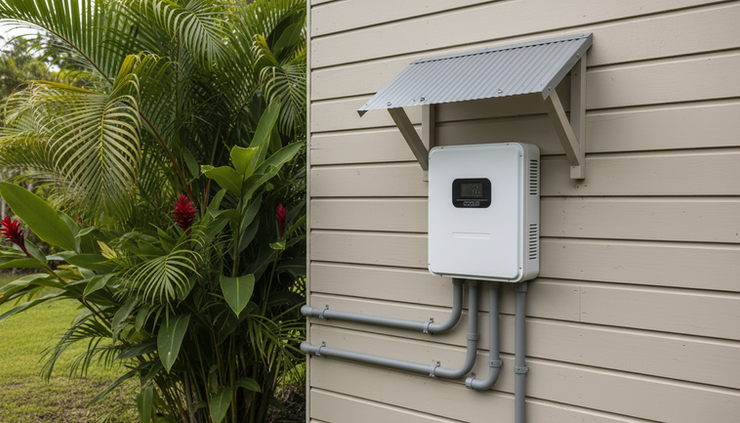
Inverters should be located where they are protected from harsh weather and excessive heat while still allowing safe access for inspection and service.
Weather-resistant isolators and enclosures
Outdoor electrical components need to be suitable for local conditions. Moisture entry, poor sealing, and low-grade enclosures can cause future faults.
Cyclone-aware mounting
Roof fixings, rails, clamps, and layout need to suit the roof type and local wind requirements. Good mounting is not a place to cut corners.
Clean cable management
Cables should be protected, supported, and routed neatly. Loose or exposed cabling can create problems over time, especially in storms and high UV conditions.
Batteries can help, but they are not the first answer for every site
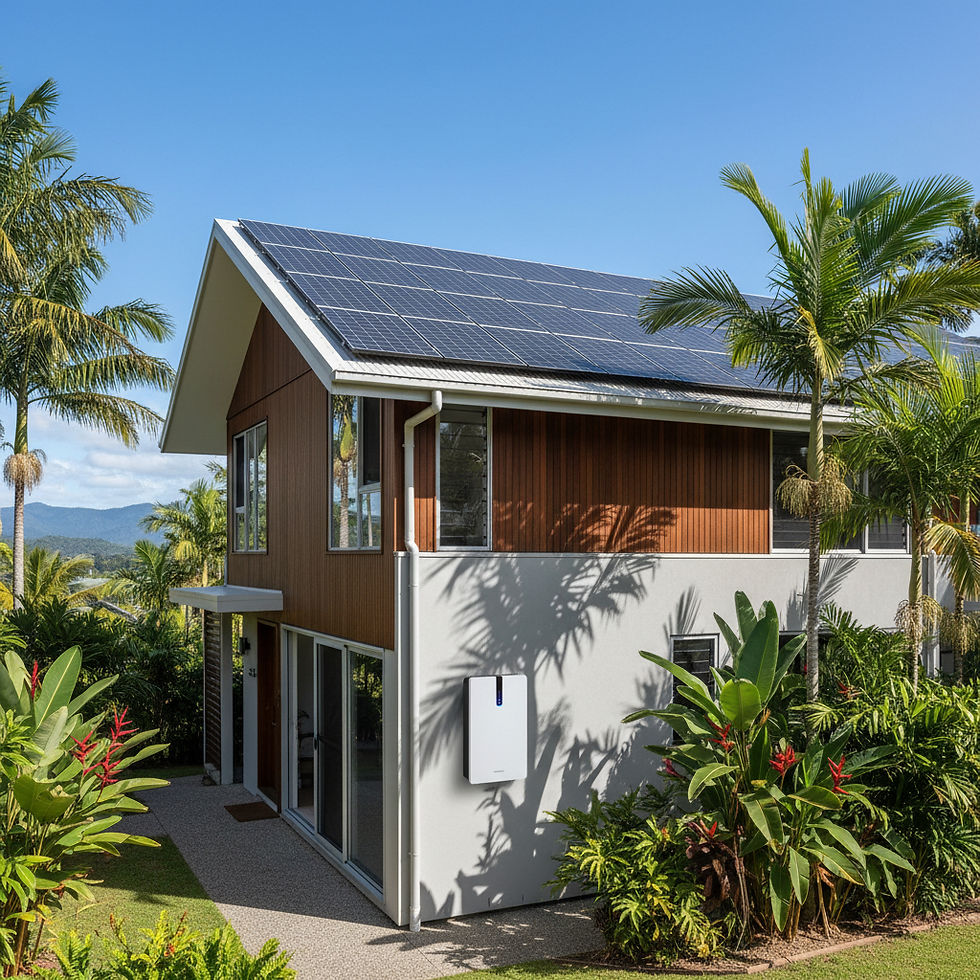
Battery storage is becoming more common, especially where households want backup capacity or higher self-consumption. In rural areas, batteries may also appeal where grid interruptions are a concern.
Even so, a battery should be assessed carefully. The first step is understanding when the property uses energy.
A battery may suit a site that:
Uses a lot of power after sunset
Has low daytime use but strong evening demand
Wants backup power for selected circuits
Plans to add EV charging or other new loads
Has limited value from exporting excess solar
For other properties, the better first move may be a well-sized solar PV system without batteries, followed by load shifting. Running suitable appliances, pumps, or hot water during solar production hours can improve returns without the extra battery cost.
A staged approach often works well. Install solar first, monitor the results, then decide whether battery storage will add enough value.
What a clear solar proposal should include
A solar proposal should do more than list a price. It should explain the system clearly enough that the owner can compare value, not just cost.
A strong proposal will usually include:
What to check | Why it matters |
Panel and inverter details | Confirms the actual products being installed |
System size in kW | Shows the total solar panel capacity |
Estimated production | Helps set realistic expectations |
STC discount | Shows how the incentive affects upfront cost |
Roof layout | Identifies orientation, shading, and panel placement |
Installation scope | Clarifies switchboard work, metering, and approvals |
Warranty information | Explains product and workmanship coverage |
Local suitability | Shows whether the design suits FNQ conditions |
The lowest price can be tempting, especially when quotes look similar at a glance. The details often reveal the real difference.
A system designed for FNQ should not feel generic. It should reflect the roof, weather exposure, power usage, and long-term goals of the property.
Why timing still matters
Because the STC deeming period reduces each year, the certificate value available for a new system generally reduces as time passes. The market value of STCs can also move, so the final discount may vary.
That does not mean every property owner should rush. A rushed installation with poor design is a poor investment. Timing matters, but workmanship matters more.
A sensible approach is to gather electricity data, assess the site, review the current system options, and make a decision with clear numbers. If the property is ready for solar, acting sooner may preserve more of the available incentive while also starting energy savings earlier.
This content is general information only. Solar system costs, savings, and incentives vary by property, electricity retailer, network requirements, and the rules in place at the time of installation.

The value of local electrical knowledge
Solar is both an energy investment and an electrical installation. In Far North Queensland, local knowledge can make a real difference.
A local electrical team understands the practical details that affect system life and performance. That includes tropical weather, roof types, switchboard conditions, rural supply issues, and the way homes and farms in the region actually use power.
C & D Electrical and Instrumentation focuses on solar solutions that are clear from the start and built for local conditions. That means explaining STCs in plain language, recommending suitable equipment, and installing systems with the care expected from licensed electrical work.
For homeowners, the goal may be lower bills and greater energy independence. For primary producers, it may be reducing operating costs across pumps, sheds, refrigeration, or daytime equipment. For small businesses, it may be improving control over one of the most persistent overheads.
The right solar system should feel practical, not confusing. It should suit the site, make use of FNQ’s strong sunshine, and continue doing its job through heat, rain, and seasonal change.
A well-planned solar investment starts with three questions: how much energy the property uses, when it uses it, and what conditions the system must survive. Once those answers are clear, STCs become easier to understand, system size becomes easier to choose, and the path towards long-term energy independence becomes much more straightforward.


Comments